Monday, June 28, 2010

2010:YEAR OF TEENAGE KILLINGS BY CRPF


2010: YEAR OF TEENAGE KILLINGS
Out Of 12, 9 Fell To CRPF Bullets
Courtesy: Daily Greater Kashmir dated June 29th, 2010 by ARIF SHAFI WANI
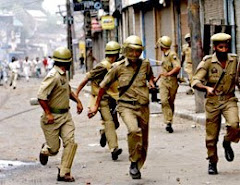
Srinagar, June 28: In a dangerous pattern, 12 persons, mostly teenagers, were killed since January this year in disproportionate use of force mainly by paramilitary CRPF troopers while maintaining “law and order.”
Out of 12, the CRPF have killed 9 persons in indiscriminate firing while quelling protests. Two teenagers died after being hit by teargas canisters fired by police while another was killed in firing by the Border Security Force personnel. Incidentally, June turned out to be bloodiest with 8 killings registered till now.
While the State Government has asked New Delhi to reign in the CRPF troopers operating in the Valley, there is no end to the killings with two of them taking place today.
The killing spree this year started on January 8 with the death of 16-year old Inayat Khan of Dalgate in unprovoked firing by CRPF at Budshah Chowk. The killing had evoked widespread protests across the city. The Government responded by just expressing sorrow over the killing and extending monetary relief to the affected family.
On January 31, Wamiq Farooq, 13, of Rainawari was killed after a teargas shell fired by police hit his head. After massive protests for days together, Police claimed to have suspended the Assistant Sub-Inspector. However, when Wamiq’s family demanded action against the accused, police even denied them the FIR copy. The hapless family got the FIR copy on intervention of the Court. The family was shocked when the police described Wamiq as a ‘miscreant.’ The case is going on in the Court.
As the Valley was yet to recover from Wamiq’s killing, Zahid Farooq, 16, of Nishat was killed when BSF personnel opened unprovoked firing on him at Kralsangri. Incidentally, the BSF had initially denied their involvement in the incident. It was only after the Chief Minister Omar Abdullah took up the issue with the Home Minister P. Chidambaram that the BSF extended cooperation in the investigation.
For the first time in the past two years, the BSF admitted that its personnel including a Commandant RK Birdi and constable Lakhvinder were involved in the incident and handed them over to police. The duo is facing trial. However the BSF has filed an application seeking transfer of case to its Court.
A week later, 17 year old Zubair Ahmad Bhat was killed when CRPF while dispersing the protesters, allegedly forced him to jump in a river and continued to pelt stones on him till he breathed his last. Police closed the case terming it as a case of drowning.
Since past 17 days, eight persons were killed. On June 11, 17 year-old Tufail Ahmad Matoo was killed after a teargas canister fired by police hit his head at Rajouri Kadal. Police had earlier maintained that it had not fired a single bullet or tear smoke shell in the area on the fateful day.
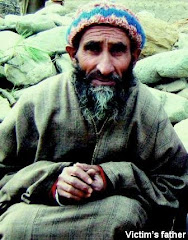
However Tufail’s autopsy report confirmed that he was killed by a teargas shell which had damaged his brain and skull. Police ordered an inquiry into the killing but its findings are yet to be made public. Tufail’s father, Muhammad Ashraf, has accused the government of failing to arrest the accused despite their identification.
To protest against Tufail’s killing, hundreds of people took to streets in Old City. While dispersing the protesters, the troopers of CRPF caught hold of a pedestrian, Muhammad Rafique Bangroo, 24, thrashing him severely. After battling for life for a week, Bangroo breathed his last at SKIMS.
On June 20, the day of Bangroo’s funeral, the troopers opened indiscriminate fire on the protesters who had allegedly attacked a bunker at Noorbagh. In the incident, Bangroo’s relative, Javid Ahmad Malla, died due to bullet injuries on the spot.
Malla’s killing triggered violent protests across the city forcing the authorities to clamp curfew for four days. CM Omar Abdullah responded by directing the Divisional Commissioner, Kashmir, Naseema Lanker, to probe the killing and submit a report within a week. However the report is yet to be made public.
On June 25, two youth Shakeel Ahmad Ganai, 24, and Firdous Ahmad Kakroo, 20, were killed when CRPF troopers fired upon a procession demanding bodies of two militants killed in Sopur. The Government has ordered a judicial inquiry headed by the chairperson of State Human Rights Commission, Justice Bashir-ud-Din. The terms of reference for the Judicial Commission include ‘to ascertain the causes of death of the two youth, to determine the persons responsible for these deaths and fix responsibility for use of excessive force, if any.’
Following violent protests against the killing, the authorities imposed curfew in Sopur and its adjoining areas. However, on June 27 evening, a small group of protesters defied the restrictions demanding stern punishment against the accused troopers. The troopers fired on the protesters killing Bilal Ahmed Wani, 23, of Kralte Sopur.
Registering his protest against Bilal’s killing, the Law Minister and senior National Conference leader, Ali Muhammad Sagar, during a press conference accused the CRPF of defying CM’s orders and killing civilians.
Sagar described the firing by CRPF as unwarranted, saying some 20 youth had gathered in Sopur town and there was no justification to open fire on them.
Not taking lessons from the previous killings or the State’s Government’s snub, the CRPF troopers continued with their killing spree killing a youth and a nine year old boy during protests on Monday.
Tufail Ahmed Rather, 9, was killed when CRPF opened fire on protesters at Delina Varmul Monday afternoon. Twenty-one year old Tajamul Bashir Bhat died in a similar way in Sopur.

INNOCENT KILLINGS IN STAGED ENCOUNTERS:
On January 24, massive protests rocked south Kashmir against the killing of a native, Mushtaq Ahmad Mir of Kalmpora village. The locals accused the Army and Special Operations Group of using the deceased as a human shield during an encounter.
On February 13, Army claimed to have killed “oldest” militant in Pahaldagi village in Handwara in north Kashmir. However the deceased turned out to be a beggar. Police registered a murder case against Army and exhumed the body for identification.
On April 24, Army killed Ghulam Muhammad Kalas, when he along with two horses was returning home from nearby forests after collecting timber. In its defense, Army said it presumed the deceased as a militant as he did not stop despite warnings. After protests, police registered a murder case against Army. The deceased was father of eight children.
On April 29, three civilians of Rafiabad identified as Muhammad Shafi, Shehzad Ahmad and Riyaz Ahmad were killed in a fake encounter by Army in Machil and labeled as militants. After exhumation and identification of the bodies, the three persons including a trooper of Territorial Army were arrested. Though police identified the main accused Major, however he is yet to be arrested.

Monday, June 14, 2010

SRINAGAR ON BOIL AGAIN OVER TEENAGERG'S KILLING

Protests Against Tufail’s Killing Continue Amid Undeclared Curfew
Courtesty: Daily Greater Kashmir dated June 14th, 2010 by GOWHAR BHAT
Srinagar, June 13: Srinagar observed a complete shutdown amidst undeclared curfew in old city for the second consecutive day Sunday against the killing of 17-year old Tufail Ahmed Matoo in police action in Rajouri Kadal on Friday. Youth defied restrictions at many places and fought pitched battles with police and paramilitary CRPF troopers. In the day-long clashes at least 15 persons were wounded.
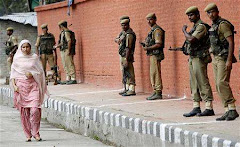
Authorities imposed undeclared curfew in the volatile old city areas falling under police stations Khanyar, Rainawari, Nowhatta, Maharajgunj and Safa Kadal. Despite restrictions and heavy deployment of police, youth took to the streets in several parts of the old city and staged pro-freedom demonstrations.
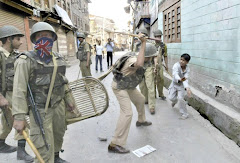
Police resorted to baton charge and fired numerous tear smoke shells to disperse the protesters who offered stiff resistance and retaliated with stones triggering clashes that continued till late in the evening.
Uptown areas, including the city centre, Lal Chowk, observed a complete shutdown while protests erupted in Bemina, Tengpora, Batamaloo, and other civil line areas.
Youth protested the killing and barricaded the roads by placing boulders and burning tyres. At several junctions in Bemina and Batamaloo, police tried to chase away protesters but they repeatedly regrouped and pelted stones on policemen.
Meanwhile the condition of SafaKadal youth, Muhammad Rafiq Bangroo, who was allegedly beaten by paramilitary CRPF troopers near his residence on Saturday, continued to be critical.
“His condition is certainly not improving. We are going to operate on him today,” doctors attending him told Greater Kashmir.
Bangroo, they said, had sustained severe head injuries and had multiple contusions in his brain.
The city roads wore a deserted look. Shops and business establishments remained closed while traffic was off the roads.
CRPF men go berserk
Residents of several city areas on Sunday accused paramilitary CRPF troopers of going berserk and beating up civilians without any provocation.
“At Rainawari, police and CRPF men roughed up a group of youth who were playing on a roadside, injuring three of them,” witnesses said.
Residents from Nawa Kadal, Safa Kadal and Batamaloo localities alleged that CRPF men beat them up without any provocation. “They also pelted stones on residential houses and smashed window panes,” residents of Tarabal told Greater Kashmir over phone.
The troopers also damaged cars and buses parked on the roadsides in the area.
The inhabitants of Rainawari and Saidakadal said that police and CRPF were not allowing them come out of their homes.
Witnesses said police barred friends and relatives from visiting the family of Tufail at Saidakadal

Wednesday, June 9, 2010

Flashback Chota Bazar- June 11th, 1991: 32 civilians massacred by Indian security forces

Syed Mansoor-Chota Bazaar massacre
that shook Valley 18 years ago
Courtesy: Daily Kashmir Times dated June 11th, 2009 by Asifa Amin Koul
SRINAGAR, Jun 10: The memories of "Syed Mansoor-Chota Bazaar mayhem" perpetrated by the Central Reserve Police Force (CRPF) personnel 18 years ago still causes a deep stir inside the hearts of the scores of bereaved families whose kiths and kins were killed in the "blood-curdling" incident.
It was Tuesday evening of June 11, 1991-when a nine-member CRPF posse came charging from their camp at Syed Mansoor Bridge towards the Government Medical College (GMC) Srinagar around 6:15 pm and opened indiscriminate firing with their automatic weapons all the way upto the densely populated downtown area of Srinagar, Chota Bazaar.
The indiscriminate firing by the security personnel took a massive toll of 32 lives of innocent civilians. Around 22 persons were also critically injured in the incident. The bullets hit shopkeepers, passerby, a 75-year old woman and a child. However, the official reports confirmed killings of 18 civilians and six injured persons.
It is believed that the reprehensible act was a catharsis to "avenge" the killing of a CRPF jawan namely Abdul Majid of Azamgarh by some unidentified militants on the same fateful day at Zainakadal Srinagar at about 3 PM. However, there was no confirmation of the killing of the CRPF jawan by the officials. (The Kashmir Times, dated June 12, 1991)
This was perhaps the most tragic incident of its kind since May 21, 1990 when mourners carrying the body of the assassinated Mirwaiz Farooq, Awami Action Committee founder-leader and father of Hurriyat Conference (M), Mirwaiz Umar Farooq, were fired upon near Islamia College Srinagar, allegedly on a fire provocation by the militants, leaving 70 unarmed civilians dead.
Eyewitnesses of the horrendous incident said that while forcing their way into the provision store in front of the hospital, the CRPF jawans dragged people out and opened fire on them. One of the victims included a doctor of the opthomology department of SMHS hospital Srinagar who was shot in his throat despite pleading for his life while showing his identity card to the CRPF troops.
An employee of the medical college and an eyewitness to the incident had this to say: "Our store keeper Ghulam Mohammad was dragged out and shot on the road. I locked myself in the bathroom and saved my life. Besides three shots, I heard Ghulam Mohammad's cry." (The Kashmir Times, June 13, 1991)
The security forces, according to the eye witnesses, stopped four auto-rickshaws near National School, Karan Nagar Srinagar and killed their drivers as well as passengers who included 75-year old wife of one Ghulam Hussan Khan of Chota Bazaar and brothers, Mohammed Syed Baihaqi and Meerak Baihaqi.
This was unfortunately the second bereavement in seven months for the Baihaqi family of Zaldagar Srinagar as Sayeed Ahmad Baihaqi, the grand son of Mohammad Syed Baihaqi, 80, was killed outside his house by security forces on November 1, 1990 following an attack on the latter by unidentified militants.
The security personnel then entered a mechanical workshop opposite National School, Karan Nagar and killed the workshop owner, Abdul Rashid. Three employees of the workshop also fell to the bullets.
While recollecting the 18-year old tragic incident, a junior mechanic at the workshop who shares a deep anguish of the terrible mayhem, said, "Three CRPF men entered our shop and shouted 'Bhoon Daalo Sab Ko' (Kill them all!). Ignoring my master's pleas, they started firing. I saw my master dying in a pool of blood in front of me". I saw my master dying in a pool of blood in front of me... The CRPF men went out of the shop but returned a few moments later, shouting 'Koi Bacha To Nahien Hai?' (If anybody is alive?)," adding that more than 10 dead bodies were lying in pool of blood outside the shop.
According to the reports published in The Kashmir Times next day, the entire area from where 17 bodies were picked and brought to the police control room by 8 pm bore blood stains. At the police control room where the dead bodies were brought, over 1000 grieving persons gathered to ascertain the identity of the deceased. Slogans were raised against the authorities of the control room who had mounted guard against the bereaved people looking for their deceased relatives.
Whereas the then intelligence chief, Amar Kapoor and other senior officials who visited the spot were unable to explain the sequence of events, the then Senior Superintendent of Police (SSP) Srinagar, A L Khan, while admitting that all those killed were civilians told the Kashmir Times on the fateful day that a criminal case had been registered against the CRPF under Section 302 with the Karan Nagar police.
However, according to the then divisional commissioner, C Phounsong, security forces retaliated when they came under severe fire from the militants.
A day after the incident, the state government claimed to have ordered Central Bureau of Investigation (CBI) to probe into the Chota Bazaar firing and registered criminal cases in this connection to ensure a "fair and just inquiry." The official spokesman had further claimed that the security forces involved in the uncontrolled firing had been taken off from the duty. A separate commission headed by ex-chief justice, Mufti Jallal-ud-din was also appointed to inquire into the causes and circumstances leading to the Syed Mansoor-Chota Bazaar incident.
As a routine, the state government announced an ex-gratia relief of Rs one lakh each to the next of the kin of those killed at Syed Mansoor-Chota Bazaar. As a mark of protest against the tragic incident, shops, banks, government and semi-government establishments remained closed in the areas not coming under the purview of curfew. Transport services also remained off the roads in the entire Kashmir valley in view of the strike called by a militant outfit group, Al-Umar Mujahideen.
To pay obeisance to the deceased, hundreds of people visited the "massacre site" during the curfew relaxation period next day to the incident and placed flowers at spots from where the dead bodies of innocent persons were picked up. People from the nearby localities served food and water to the grieving visitors.
While talking to The Kashmir Times, Shakeel Bhakshi, a separatist leader opined that unless the perpetrators of the incidents like Syed-Mansoor-Chota Bazaar are not dealt with on the "war criminal" procedure, such incidents would continue to occur time and again.

Thursday, May 27, 2010

75-95% people in Kashmir valley want Independence from India: King's College London Survey Report

Just 2% of people in J&K want to join Pak: Survey
Courtesy: Times of India dated May 28, 2010,
NEW DELHI: For those who still think a plebiscite will tilt the status of Kashmir and that most Kashmiris yearn to wave the Pakistani green, there are now numbers for the first time to contradict these claims.

A survey carried out across both Jammu and Kashmir and Pakistan-occupied Kashmir, that its author claims is the first ever of its kind, shows that only 2% of the respondents on the Indian side favour joining Pakistan and most such views were confined to Srinagar and Budgam districts. In six of the districts surveyed late last year by researchers from the London-based thinktank Chatham House, not a single person favoured annexation with Pakistan, a notion that remains the bedrock for the hardline separate campaign in Kashmir.

However, the study by Robert Bradrock, a scholar from London's Kings College, that involved interviewing 3,774 people in both parts of Kashmir in September-October 2009 showed that 44% of people on the Pakistani side favoured independence, compared to 43% in Indian Kashmir.

Bradrock says in the 37-page report on the survey that this would put an end for all times to come to the plebiscite route as a possible way to resolve Kashmir, since the only two options envisaged under the UN resolutions proposing plebiscite in 1948/49 were for the whole of Kashmir to join either India or Pakistan; azadi was not an option. But in the Valley, the mood for azadi still remained strong, with 75%-95% respondents favouring that as a final resolution.

The poll showed no support either for joint sovereignty or for maintaining status quo. However, more than 58% of those surveyed were prepared to accept the Line of Control as a permanent border if it could be liberalized for greater people-to-people contact and trade. Only 8% voted against making the LoC a permanent boundary, with the highest level of opposition in Anantnag district, the report said.

Few people in Kashmir, compared to many more in PoK, believed that violence was likely to resolve the Kashmir issue.

In J&K, only 20% thought that militant violence would help solve the problem, compared to nearly 40% who thought it was coming in the way of a resolution. In PoK, 37% of those surveyed held the view that violence was a possible route to resolution.

That both the state legislative elections in 2008 and the Lok Sabha elections in 2009 had helped bring about a change in mindsets was seen in the increasingly high turnouts that Kashmir has posted in recent years.

The survey too demonstrated that trend, with more than half the respondents saying the elections had improved chances for peace.

"The results aren't surprising at all. I feel they re-emphasize the need to look beyond traditional positions and evaluate the contours of a solution grounded in today's realities," said Sajjad Lone, a former ally of the Hurriyat who unsuccessfully contested the 2009 election.

Peoples Democratic Party chief spokesman Naeem Akhtar said the azadi aspirations must be factored into any solution.

"It can't be wished away and has to be configured into the future strategy on Kashmir. We've always been pleading to provide an alternative to the azadi sentiment."

Three youth killed in fake encounter by Army in Baramulla

Courtesy: Daily Kashmir Times dated May 28th, 2010 by SHABIR IBN YUSUF
SRINAGAR, May 27: Army has allegedly killed three boys of Nadihal Baramulla in fake encounter at LoC in Machil sector of Kupwara on April 30. Police has arrested two government gunmen but army has denied to comment on the incident.
Three boys identified as Shazad Ahmad Khan, Riyaz Ahmad Lone and Muhammad Shafi Lone of Nadihal Baramulla went missing from their homes on April 27. The family members of the trio searched for them but were unable to trace them. They approached police and police registered a missing report on May 10 in the police station Panzala.
The residents of Nadihal held protest demonstrations and SP Sopore Altaf Khan assured them fast and fair investigation into the case of missing of three boys and the residents called off their protests.
Police sources said the family members of the missing youth in their statement to police said Bashir Ahmad Lone a government gunman turned SPO, now working for army, is involved in the disappearance of three boys. Sources added that police interrogated Bashir and he identified the dreaded government gunman Fayaz Ikhwani alias Gazi of Tujjar Sharief Sopore.
Police sources said that the government gunmen confessed that on April 26 they gave Rs 5,000 each to three boys and asked them to come next day for more money. Sources added when the trio approached the government gunmen Bashir and Fayaz the next day, the latter took them along and since then they are missing. Police sources said that the call record of Fayaz Ikhwani confirms that he was in Thayen area of Kalroos when the trio was killed in Machil and the bodies were brought to Kalroos.
SP Sopore Altaf Khan said that they are investigating the matter and have registered a case in this regard. He, however, said they have picked up some people for questioning. He said divulging any details at this juncture will hamper the investigations. “We have registered a case and have brought some people for questioning,” said SP Sopore. “It is immature to conclude whether they are involved in it or not. It will get confirmed after the investigations are complete,” Altaf Khan added.
It is pertinent to mention that Machil encounter in which army claimed that they killed three militants but recovered five AK 47 rifles. Sources in the police, however, maintained that there was possibility of this being a “fake” encounter. The three missing boys, it is believed, may have been handed over by the two Ikhwanis to the army who killed them in what came to be publicized as Machil encounter about a month ago.
On April 30 Srinagar based PRO defence in a statement said that the “ troopers on noticing some movement on the LoC in the wee hours today challenged some militants and asked them to surrender but they opened fire and in the retaliatory action three militants were killed. The operation was still on,” the statement said.
The statement added that three AK 47 rifles were recovered, besides other ammunition. “On checking their belongings, two more AK rifles and a pistol were recovered besides other items. Their identity is yet to be ascertained. Probably they tried to use the bad weather conditions to sneak in. But alert troops foiled the attempt,” read the statement on that day.
PRO defence in Srinagar however denied commenting on the matter. “No comments,” he said.

Friday, April 2, 2010

SHRC’s Annual report-2008-09: 9 custodial deaths, 43 missing, 6 rapes

Courtesy: Daily Kashmir Times dated April 2nd, 2010 by Syed Junaid Hashmi
JAMMU, Apr 1: State Human Rights Commission (SHRC) instituted 404 cases of human rights violation which included 6 rapes, 43 disappearances and 9 custodial deaths during the last financial year 2008-09 in Jammu and Kashmir.
The figures clearly indicate continuance of rights violations despite promises and pledges of “zero tolerance” by both centre and the state. More shocking is the fact that cases of custodial disappearance and killings are still being reported to SHRC when successive governments in Jammu and Kashmir as also the union home ministry have been vehemently boasting of having improved the human rights atmosphere in the state.
Chief Minister Omar Abdullah, like his predecessor Ghulam Nabi Azad, has been on record having stated that custodial disappearance and killings have become thing of past. However, a voluminous annual statement of SHRC for year 2008-09 tabled by Minister for Finance Abdul Rahim Rather in the legislative assembly today contradicts both statements of respective Chief Ministers and the CAG report.
Apart from giving detailed account of what happened here and who did what, annual report reflects the helplessness of state government in plugging rights violations by both central and state agencies. From ground zero in Kashmir valley which witnesses some kind of security action and harassment on routine basis, SHRC instituted 235 cases of rights violation during 2008-09 in Kashmir division.
Not surprising, the cases instituted included 3 cases of rape, 6 of Custodial Death and 43 of disappearance. Of the 3 cases of rape, 1 was instituted in Srinagar and 2 in Baramulla while 6 custodial deaths were recorded from Srinagar (1), Kupwara (1), Baramulla (1), Anantnag (2) and Shopian (1). With 12 disappearances, Kupwara recorded highest number during the year followed by 7 in Pulwama, 5 in Budgam, 4 each in Srinagar and Baramulla, 3 each in Anantnag, Kulgam and Ganderbal alongwith 2 in Bandipora.
No case of disappearance was reported from district Shopian. Similarly, 164 cases of rights violation were instituted by SHRC during 2008-09 in Jammu division. Of this, among other cases of violation, 3 cases of rape were registered with 2 in Poonch and 1 in Doda. 3 custodial deaths were reported with 2 in Poonch and 1 in Doda. Of the 6 cases of disappearance, 5 are from Poonch and 1 from Rajouri.
Figures may be inconsequential but are significant since they contradict government claims. Commission disposed off 698 cases from April 1, 2008 to March 31, 2009 which included 269 cases of Kashmir division, 423 of Jammu division, 1 from Ladakh and 5 from outside the state. Among other cases, SHRC disposed off 22 cases of custodial death and 38 of disappearance during the year 2008-09 in Kashmir valley.
On similar lines, it made recommendations in 2 cases of rape both from Doda, 19 cases of custodial death and 16 of disappearance in Jammu region. One case of custodial death reported from Ladakh was also disposed off. 5 cases instituted by state subjects from outside the state which included one of custodial death were also disposed off.
It is notable to mention here that of the 404 cases of rights violation instituted in 2008-09, 71 are of relief and 54 of harassment, thus constituting highest number (124) among all categories of violations. On disposal side of the 698 cases, highest number was again of cases reported for alleged harassment (96) and issues related to relief disbursement (209).

Troops raped 51 Kashmiri women in 6 yrs: J&K Police

Courtesy: Daily Rising Kashmir News dated April 2nd, 2010
Jammu, April 01: Police on Thursday said troops had allegedly raped 51 women in Jammu and Kashmir in six years between November 2002 and July 2008.
A police spokesman in a statement said 38 rape cases allegedly by troops were reported from November 2002 to October 2005. “From November 2005 to 10 July 2008, 13 rape cases allegedly by troops were reported.”
The spokesman said that from 11 July 2008 to 4 January 2009 only one rape case allegedly by troops was reported. “During the period from 5 January 2009 to 23 February 2010 no rape case by troops was reported.”
The police spokesman said Chief Minister Omar Abdullah had mentioned in the Legislative Assembly that 11 cases of rape allegedly by troops were reported between October 1996 and October 2002, thus taking the number of raped by troops between October 1996 to July 2008 to 62.
The spokesman said that the written reply to Assembly Question No 260 which pertained to troops tabled by A R Veeri in the Legislative Assembly, it was mentioned in the reply of the Home Department that “no rape case was reported from 1st January 2009 to 1st March 2010. This information furnished pertains to allegation of rape cases reported against troops”.
The police spokesman said the Comptroller and Auditor General report had shown 53 rape cases in three months between January 2009 and March 2009. “These figures pertain to rape cases registered in entire State during this period. The figure pertains to normal crime. No rape case is reported against troops during this period.”

Monday, March 1, 2010

March 1, 1990 Zakura massacre

20 years of wait for justice; victims’ kin hope turns into despair
Courtesy: Daily Greater Kashmir dated March 2nd, 2010 by PARVAIZ RESHIFLASHBACK
Zakura, Mar 1: Exactly 20 years back on March 1, 1990, 26 unarmed demonstrators who were to submit a memorandum to United Nations Military Observers Group in India and Pakistan (UNMOGIP) were killed and hundreds wounded by troops at the crossing here.
The troops aimed at the protesters to halt the uprising.
For the relatives of those who were massacred, 20 years wait for justice seems to be turning into despair with no signs of government taking cognizance of it.
“The massacre took place at around 12, leaving 26 dead on the spot and hundreds wounded,” said a local on the condition of anonymity.
He said the demonstrators were carrying green flags with many of them with shrouds and marching towards the Srinagar raising pro-freedom slogans when the massacre took place.
He claimed troops resorted to indiscriminate firing for around two hours.
“Scores of the people belonging to Telbal, Batpora, Alusteng, Danihama, Chaterhama and adjoining areas of the Pheak region were proceeding towards Srinagar via Batpora crossing road when army in three vehicles came in the opposite direction and opened fire here at the Zakura crossing, killing 26 and hundreds wounded,” said an eyewitness.
“A day after massacre, an FIR was lodged in the police chowki Zakura (now a police station) by the then DySP Nigeen, Muhammad Abass but no action was taken against the accused army men,” said the locals.
The attempts by this reporter to get an FIR copy proved futile as police officials at the police station Zakura, said the police station was a police chowki and the FIR details were not be available.

Tuesday, February 23, 2010

The scars of Kunan-Poshpora live on


Courtesy: Daily Rising Kashmir dt Feb., 24th, 2010 by Shahjahan Afzal(Kunan-Poshpora) Kupwara, Feb 23: From a distance Shah Begum (name changed) looks like any other inconsolable survivor of Kashmir turmoil. But when one approaches her and tries to talk to her, the pain within her simply erupts.


The pain of a trauma that was unleashed by the drunken troopers of Rajput Rifles exactly 19 years ago on village Kunan-Poshpora, 114 km north of Srinagar and some 10 km from Kupwara district headquarters.

Shah is seated on the verandah of her house, combing the hairs of her handicapped daughter, who is said to have lost her limb after she jumped from the first floor of the old house to save her chastity from the clenches of drunken troopers on that fateful night, the night intervening February 23-24, 1991.

When approached, she unfolds the trauma to yet another woman, this time round a social worker accompanying this reporter.

“First it was Nas…, then Jan… and finally it was the turn of Sha…,” Shah begins but stops shifts to hysterical screams.

Already in the autumn of her life, Shah (70) would easily qualify as one of the worst-hit survivors of the ghastly incident that has shaken the psyche of not just Kunan-Poshpora but all Kashmiris for almost two decades now.

Dozens of women reported that they were gangraped by the troops that night. “The government has shelved the case after ordering an inquiry, which rather bruised the character of the victims,” says Ishaq, a local.

Nineteen years after the gory incident, no one seems willing to reopen the old wounds, this elderly survivor being the only exception. Shah, then 52, told the lady social worker that she resisted "them" till her worn-out muscles gave way. “I resisted them for nearly 15 minutes,” she told the visitor. Shah, according to her relatives, isolated herself for a long time after the incident. She preferred to stay away from hordes of visiting journalists during her self-imposed confinement in a dingy room of her shabby house. She is now in her 70s but still eager to see "the rapists behind the bars".

Another victim, who is scared of looking into the mirror eversince the incident, remained mum. According to villagers, she loses her nerves the moment a mirror comes in sight.

Apart from the trauma, the people of the area face problems on all fronts, including social, economic, development and also on educational front. This, the villagers say, mocks at the tall claims of government and the NGOs of raising lots of funds for the "overall upliftment" of the tragedy survivors here, thereby misleading the international community.

Most of the people are still residing here in ordinary houses, with most of the local youth working as labourers or doing other menial jobs.

Kunan-Poshpora village is flood-prone and each year the whole area is inundated by the swollen Nallah Kahmil, flowing alongside the village. Villagers accuse that no measures have been taken by the government or any other agency to help the affected.

The only Middle school here has not been upgraded since and local children have to tread miles to attend their high and higher secondary classes. This is said to be the main factor responsible for the educational backwardness of the people here.

People are still reluctant to send their wards outside the village, fearing social stigma and a scare of another 1991-like tragedy.

Nineteen years hence, whenever journalists and social activists frequent the Kunan-Poshpora hamlet to assess the present situation, an eerie silence greets them. People are out on their usual assignments, not uttering a word and afraid of speaking openly. Perhaps disappointed by one and all, they now feel it better to bury the scars of the tragedy deep in their hearts.

But Farooq Ahmad, a senior citizen, expresses surprise over the "silence" maintained by the human rights agencies in India. He terms the silence of these agencies as "biased and criminal" and urges immediate reopening of the case.

Says a local youth, "I was thrice interrogated by troops for raising voice against the incident." According to Bashir A Chogly, a local social worker, “Some usual hue and cry was made but no serious efforts were made to gauge the severity of the insulting incident.”

Salt To Injury

The mass rape had evoked strong resentment, sparking massive protests and condemnations for weeks together from different corners of the world and Kashmir, in particular. Public anger forced the government to register a case and order a probe. But the case was hushed up.

On the request of Indian army, the probe held by then Chairman Press Council of India, bailed out the troops and sprinkled "salt on the wounds" of Kashmiris by instead castigating the character of the victims.

The report, said to have been compiled in some army camp in Pattan area of Kashmir, threw to winds the final report of then Deputy Commissioner Kupwara S M Yasin, who visited the village on March 7, 1991 to investigate. In his report, Yasin stated that the soldiers "behaved like wild beasts ... gang raped 23 ladies, without any consideration of age, married, unmarried, pregnancy etc…."

Kunanposhpora mass rape victims remember ordeal

Courtesy: Daily Greater Kashmir dated February 23rd, 2010 by Umar Maqbool
Kupwara, Feb 22: Nineteen years after, the victims of mass rape by troopers in Kunanposhpora village of district Kupwara are struggling to come to terms with life.
It was on intervening night of Feb 23 and 24 in 1991, when drunk troopers of 4 Raj Rifles C/O 68 Brigade entered the Kunanposhpora village and raped 42 women and girls.
Residents told Greater Kashmir that on fateful night troopers cordoned off the village and ordered the men to come out of their houses for parade and searches.
“They entered into houses and asked us to come out. We heard the screams of women and tried to save their chastity but we were ruthlessly beaten by troopers. It was only the next morning that they left the village not before they forced villagers to give them NOC,” said a villager Fayaz Ahmed.
The victims wept while narrating the ordeal of the fateful night when troopers tarnished their honour.
“I was in my home that time. Seven to eight troopers broke the door and forced their way in. They tore off my clothes. They continued to rape me one by one throughout the night. I cried but nobody listened. The soldiers gagged my mouth and I fell unconscious,” says Nazima (name changed).
Another victim Sara (name changed) was nine months pregnant when troopers raped her. “I was raped by seven to eight soldiers throughout night. My mother tried to save my honour but she was thrown out of window. They also kicked my stomach which resulted in giving birth to a baby with fractured arm,” she adds.
“The armed forces had turned violent and behaved like beasts. I feel ashamed to put in black and white the kind of atrocities and their magnitude brought to my notice,” the then District Magistrate Kupwara wrote to Divisional Commissioner Kashmir.
After the shocking incident, an FIR was lodged in police station Trehgam bearing number R-1/1387/88 under RPC 376-452-342, but till date no charge sheet has been presented.
But 19 years down the line, the victims are living a miserable life, facing social stigma. “Lives of our womenfolk have been ruined. Their husbands left them and many of them have psychiatric disorders,” village elders said.

Monday, February 22, 2010

Flashback February 21st, 2009: Bomai shuts on youths' killings

Courtesy: Daily Rising Kashmir dated February 22nd, 2010 by Asem Mohiuddin/Mir Tariq
Sopore, Feb 21: As Bomai observed complete shutdown on Sunday to commemorate the death anniversary of two youth killed by troopers on February 21 last year, the family members and relatives of the slain youth have demanded action against the men in uniform, who were indicted by the government probe for killing the civilians.

On February 21, 2009, two youth Javed Ahmad Dar and Mohammad Amin Tantray hailing from Muslimpir Sopore were shot dead by army personnel at Bomai without any provocation. Another youth was seriously injured in the troopers firing. An FIR number 73/09 under section number RPC 302, dated 21-2-2009 stands registered against 22 RR in police station Sopore.

The locals formed Bomai Coordination Committee and pressed for action against the troopers involved in killing of Tantray and Dar and shifting of army camp from the area. Caving to the public press, Chief Minister Omar Abdullah ordered a magisterial probe while army initiated a court of inquiry. On March 24, 2009, the government shifted army’s infamous Rajinder Post from the area to Wadoora.

“After the two youth were killed by troops, the government had assured us that prompt action would be taken against the guilty troopers. Unfortunately, the government has not kept its promise and nothing has happened,” said Mohammad Ismail, father of one of the victims, with tears rolling down his cheeks.

He said troopers involved in the killing have been identified but no action taken against them so far. “Two army men and an SOG personal have been found involved in opening indiscriminate and unprovoked firing on the youth on the fateful day. The same has been found by the government team that probed the incident. The investigations were led by then Deputy Commissioner Baramulla Baseer Ahmad Khan,” he said.

Sources said that the inquiry reported forwarded by the inquiry team to Chief Minister, Omar Abdullah and union home minister had clearly indicted the troopers for killing the youth.

Ismail urged the chief minister Omar Abdullah to restart probe into the incident and punish the guilty troopers. “The government should arrest the troopers involved in the killings. The guilty men should be punished severely so that such incidents don’t recur in future,” he said, adding, “The Chief minister should fulfill his promise of acting tough against the erring troopers”.

Sopore Bar association President, Mohammad Maqbool Mir said they will approach the court if government delays deliverance of justice and fails to take action against the guilty troopers.

The Bomai area observed complete shutdown on Sunday to commemorate the death anniversary of two youth killed in troopers firing. All the shops and business establishments in the area remained closed. People in hundreds visited the graveyard, where the two are buried and prayed for peace to the departed soul.

Hundreds of people with banners and placards gathered in front of Jamia Masjid on the call of Bomai Coordination Committee (BCC).

“We gathered here to remind CM about his promises. Though the camp was relocated but the killers are yet to be punished,” said BCC President Hakeem-Ul-Rehman

He said that instead of punishing killers, police charge sheeted 65 people of the village for taking part in protest demonstrations.

He demanded Nishat-like prompt probe into the incident and severe punishment to the killers of the youth.

“We agitated peacefully, held demonstrations and sit-ins consistently. Our peaceful agitation forced government to relocate the camp from the area. But unfortunately the government is not daring to punish the army men found involved in the killing,” Hakeem said.

He accused government of betraying the Bomai people. “We have not given up our demands and will continue to agitate peacefully till the guilty troopers are punished,” he said.

“We observed the shutdown today to remind the government of the killings. We will wait for government response till Tuesday and chalk future strategy afterwards,” added Hakeem

Wednesday, January 27, 2010

27 Kashmiris killed by armymen for observing shutdown on Jan 26

Flashback: January 27th, 1993
Courtesy: Daily Greater Kashmir dated January 27th, 2009 by Shahid Rafiq
Kupwara, Jan 26: The residents of this border district have a reason to observe shutdown on January 26.
It was on January 27, 1993 that 27 civilians fell to indiscriminate firing by the troops.
According to eye-witnesses, troops gunned down the people in Kupwara town for observing shutdown on Republic Day.
The survivors alleged that killing was to punish the people for observing shutdown on January 26.
They disclosed that a patrolling party of Punjab regiment had warned the shopkeepers on the eve of January 26 of dire consequences if they observed strike and didn’t celebrate the Republic Day.
“As the shopkeepers opened their shops on January 27, the troops opened fire from all directions killing 27 people. After the gruesome massacre, they asked us to assemble in the ground and undergo an identification parade,” said a survivor.
He said that no one was allowed to lift the bodies and take the injured to the hospital.
“A boy died in front of his father, who begged the troops to allow him to take his son to the hospital. But they didn’t pay heed to his pleas,” he revealed.
After the incident, police registered a case FIR No- 19/94 under sections 302, 307 dated 27-1-94 in police station Kupwara.
The FIR reads: “in a criminal assault, the jawans of 31 medium regiment who were on ROP (road opening duty) led by field officer S Bakhshi gunned down scores of people in indiscriminate firing in Kupwara market and its vicinity without any provocation.”
After 17 years of registration of FIR, justice to bring perpetrators of the massacre to book eludes the kin of the victims.
On Tuesday, this town observed a complete shutdown today and held a commemorative meeting at Regipora martyrs’ graveyard where people in large number prayed for peace to the departed souls.
“We demand that the case should be reopened and killers be punished,” said those who attended the meeting.
“We are waiting for the day when killers would be punished,” said Tariq Khan, one of the survivors.
MLA Kupwara Mir Saif-ullah paid his homage to the civilians martyred.
“I will seek a report from district development commissioner Kupwara about the steps of relief and rehabilitation of the sufferers of Kupwara massacre,” he told Greater Kashmir.
“I will take up the matter with top police officials and seek from them the status of the Kupwara massacre case. The perpetrators of should be brought to book,” he said.

Thursday, January 21, 2010

32 bullets, he took 'em all, to shield others from unrelenting guns of Indian armymen

Courtesy: Daily Rising Kashmir dated January 21st, 2009 by Baba Umar
Srinagar, Jan 20: It was the morning of January 21, 1990. The sun came up without much sparkle but it shone on young Rauf’s face for the last time. For, by noon, he was lying on the ground in his favourite blue jacket and green shoes, his body pierced by a hail of troopers’ bullets.

And, two decades later, his family and those who saw him getting killed along with 52 other peaceful protesters in Kashmir’s first massacre since the armed rebellion broke out in 1989 against the Indian rule, try to look back on the event that gave birth to a generation of angry youngmen. A violent uprising and a separatist sentiment never seen before in Kashmir.

On that fateful morning, Abdur Rauf Wani (24) and his father G A Wani, a government employee, watched from the window a huge but peaceful procession passing through Maharaja Bazar, trigerred by the news of molestation of women in the old city, strict curfews and restrictions.

It was also just a day after New Delhi appointed Jagmohan as J-K Governor in a bid to control mass protests by Kashmiris.
In the street below, men in thousands raised their fists, with slogans ‘Hum Kya Chahte... Azadi’ (We Want Freedom) renting the air. Nothing unusual, as people had grown used to these reminders. But Rauf, unable to contain the surge of emotions within, turned to his father and what followed was a little "more unusual".

“Bauji, this’ll be now begairti (disgrace), should we not join now,” Zulehama Banday, Rauf’s older sister recalls his brother’s conversation with dad.
The senior Wani looked back, waited for a moment and then nodded his head. “Should I go,” Rauf again insisted. “Yes,” his father replied.

Zulehama says it was the first time that the family had okayed Rouf's request to join the peaceful protests. Rauf was soon away, smashing a flower vase in hurry. He stumbled but got up immediately. He performed ablutions, fixed the shoe laces, adjusted his jeans and slid both arms in the blue jacket that he had slung on his right shoulder till then.

Onto the road. “A neighbour tried to stop him but he wouldn’t,” recalls Zulehama, who by now had joined her father at the window to see Rauf disappear in a swarm of youngmen.

The long strip of rally that begun from Jawahar Nagar and Ikhrajpora, Rajbagh to reach Budshah Chowk. Earlier proposed to stopover outside UNO at Sonawar, people in the front decided to drum up more support from inner city. The crowd swerved towards Maisuma that would lead demonstrators to inner city till it reached Gaw Kadal Bridge over the Jhelum.
When the front-liners of crowd was halfway across the Gaw Kadal, the paramilitary Central Reserve Police Force (CRPF) opened fire with automatic machine guns from three directions. In the next few minutes, the bridge with littered with corpses and blood. The first day of Governor Jagmohan’s rule would pass in the bloodshed.

Muhammad Altaf Qureshi (50) remembers how the march was stopped with automatic machine guns and how a fearless youngman braved bullets from an unremitting gun nozzle.
“Without any provocation and warning, they fired on us,” he recalls. Qureshi, who was in the third row, says the sounds of unrelenting gunfire triggered astampede on the wooden bridge. The charge pushed him on the deck and soon blood-stained bodies were dotting the spot. Whosoever tried to stand on his legs would be fired upon.


In this melee of bullets and screams, Qureshi noticed a youngman getting up, pushing aside with his hands both the dead and alive. “A trooper was showering bullets from a short distance and this youngman shielded people by blocking troopers’ view,” Qureshi recalls. “He took all the bullets on his chest.”

The youngster was none other than Rauf. Troopers with faces masked had emptied their carbines by puncturing Rauf’s abdomen and chest. The act of bravery saved scores from getting killed. Rauf finally collapsed, his face upwards; blood painting his blue jacket and green shoes with red.

Qureshi watched silently. He was motionless. The crowd had dispersed. "Mayhem, Massacre, God" were the cries he heard from the receding crowd. While on the bridge, troops were leaping on the corpses, kicking survivors and finishing them off. Qureshi pretended dead, hiding his face under someone’s blood-splattered torso.

“I preferred to lie with the bodies, knowing for sure I will be shot if I stirred. I closed my eyes and remembered Allah and recited Kalima without letting a sound come out,” he recalls. Then the image of his
three-month-old daughter flashed in his mind. He soon heard policemen speak in Kashmiri, shouting loud if someone was alive.

“For a while I pretended dead,” he says.
As if mere sack of flesh, blood and bones, the scene had deadened his body. He was picked up by a cop of J&K Police who inquired if he was alright. He saw policemen heave the bodies into a truck, over a tarpaulin and disappear from the spot.

“I was taken to a nearby fire station, from where I called up my home. They were waiting for my corpse after a friend and survivor told them about the massacre,” recalls Qureshi.

The news travelled to home faster than the body of Rauf. Zulehama, the other siblings and father panicked. Rauf had wished martyrdom when a funeral procession passed by the family’s house months back. Zulehama watched their elder brother Parvez Wani readying for Police Control Room (PCR), Batamaloo, where the injured and dead were taken.

At PCR gate Parvez struggled hard to enter the premises, as relatives of victims had already started to pour in. Back home, Rauf’s father was restless. He had allowed his son join the peaceful march. A sense of guilt had overtaken him. Others in the family were crying and consoling each other, assuming Rauf might have swum the river below the wooden bridge. Or he must have stayed at someone’s house.
“We were not sure, however,” Zulehama says.

But at PCR, Parvez was face-to-face with reality: he was handed the bullet-ridden body of his brother. Thirtytwo holes, he counted, had punctured Rauf - the highest number of bullets fired on anyone in the rally. “And when the body reached our home…everyone……” Zulehama is unable to continue.

It was not for the first time that he had risked his life to save others. In 1984, Rauf risked his life to save a Sikh laborer who was shot on head while he was lacing his shoes in the street. Family members say that the labourer had cried for help, and when others in the neighbourhood shut their doors and windows, Rauf rushed out and took him to the nearby hospital.

“He was 18 then,” Zulehama says. Three years later, in 1987, Rauf along with hundreds of youth was dragged to jail for supporting a political party Muslim United Front (MUF). Rauf was bundled into the notorious PAPA-2 interrogation chamber for 21 days.

Zulehama also remembers how young Rauf would shift a mound of sand outside a neighbour’s house making way for guests during a marriage.

Rauf was laid to rest at a graveyard in Sarai Bala, besides Dastageer Sahib Shrine. Soon after, the family sold their property and moved to another locality. And in 2006, Rauf was posthumously honoured with Robert Thorpe award.

Zulehama knows police had registered a case which was, however, closed in 2005 and those involved in Kashmir’s first massacre were declared untraceable.
But when I ask her what does she think and if she wants the case reopened, her silence is coupled with soaked eyes. For a moment she speaks nothing. Then she says: "Yes. It must be.

“When I think of my brother,” she says, “the thoughts are not just of the wonderful time we shared. It is of the brutal way in which he was killed, the irrationality of the act, and ultimately, the offenders and the Indian justice system."

Friday, January 8, 2010

‘Atrocities in 2008 protests pushed Manzoor to militancy’

Courtesy; Daily Rising Kashmir dated Jan. 9th, 2010 by Asem Mohiuddin
Sopore, Jan 08: The family members of a Sopore youth Manzoor alias Usmaan, who died in a 22-hour long gunfight in Lal Chowk yesterday, alleged that the highhandedness committed by the troopers during the 2008 Amarnath land row agitation prompted him to join the militant ranks.

Manzoor along with another militant was killed in the Lal Chowk encounter. His body was brought to his home town - Peth Seer, Sopore on late Thursday night. Later, hundreds of people attended his Nimaz-e-Jinaza amidst pro-freedom, pro-Islamic and anti-India slogans.
Manzoor’s family claims that he joined militant outfit-Lashker-e-Toiba, one and a half year ago when the valley was up in flames during Amarnath land row agitation.
“He was class 9th drop out and worked as a painter to sustain his poor family. During the 2008 Amarnath Land row agitation, he alongwith hundreds of people of the area participated in the protest demonstrations to express resentment over the transfer of forest land to Shri Amarnath Shrine Board. On August 11, 2008, he joined the “Muzafarabad Chalo march” and saw the troopers firing on unarmed protestors, beating women and children,” said Manzoor’s uncle, Mohammad Akbar.
He said the highhandedness and excesses committed by the troopers changed his mind-set and prompted him to join the militant ranks.
His father, Ghulam Rasool said Manzoor used to frequently talk about the excesses committed by the troopers during the “Muzafarabad Chalo March”.
“Manzoor used to offer five-time prayers and recite Holy Quran daily in the morning. One the second day of Ramdan he told us that he will join Tableegi Jamaat for some time. We allowed him for the sake of his happiness. However, I was aware about his intentions as his mindset has changed radically after Muzaffarabad March. After leaving home, he never returned. He had joined Lashkar-e-Toiba and we saw him with an AK-47 rifle after six months when he came to meet us,” said Ghulam Rasool.
He said owing to intense pressure from security and intelligence agencies, they had urged Manzoor to surrender and live a normal life but of no avail. “The security agencies harassed me and my family members after Manzoor’s refusal to surrender,” said father of the slain youth.
Manzoor’s mother Hafiza Begum, said she had a firm belief that her son is a martyr. “The death is inevitable but my son died too young. He was only 21 years old. It was the time when he could have enjoyed his life but alas he preferred death,” she mourns.
The family said that they saw Manzoor two days before his death. “Two days before his death he came to home and met all family members and had a cup of tea. He refused to stay for a longer duration and told us that he has some urgent work and had to leave the place as soon as possible,” said his grandfather, Ali Mohammad.
He said on Wednesday evening security forces came to their residence and informed them that Manzoor was trapped in an encounter in Lal Chowk. “They asked us for his contact number and told us that they will let us talk to him,” added grandpa of slain militant.

Wednesday, January 6, 2010

Jan 6, ’93, BSF massacred 55 civilians, burnt 300 houses in Sopur

Courtesy Daily Greater Kashmir dated Jan., 6th, 2010 by UMER MAQBOOL DAR
Sopur, Jan 5: Seventeen years after the Sopur massacre, justice eludes the residents of this apple town as perpetrators of the carnage have not been punished and the case is still ‘under investigation’ with the Central Bureau of Investigation.
On January 6, 1993, the paramilitary Border Security Force personnel murdered 55 civilians and torched more than 300 houses and shops in retaliation to the killing of their colleague.
Eyewitnesses told Greater Kashmir that in the morning on the fateful day, militants killed a BSF trooper and fled with his rifle. “Within minutes dozens of BSF personnel descended on the market and cordoned off the area. They resorted to indiscriminate firing on civilians,” they said.
Recalling the fateful day, the President of Traders Federation Sopur, Ghulam Nabi Khan, says that naked dance of death and destruction was unleashed by the BSF men for hours here.
“They were raining bullets on men, women and children at random. They herded civilians in shops and houses, splashed kerosene over their bodies and roasted them alive,” he says adding that the soldiers didn’t even spare the kids.
“They threw a child in fire before killing his mother. They sprinkled gunpowder on a bus coming from Bandipora and torched alive its passengers,” he added.
A local resident, Muhammad Shaban Bhat, said his brother-in-law Ghulam Nabi tried to help the injured and retrieve the bodies from the market but was also shot dead by troopers.
“Braving bullets, he brought 11 bodies and then was shot too,” Bhat said.
Following the massacre, the residents registered FIR against 94 battalion of BSF accusing them of firing on civilians without provocation. The troopers also registered an FIR against unidentified militants stating that civilians were killed in cross-firing.
President of Sopur Bar Association, Muhammad Maqbool Mir, said that killer troopers involved in the gruesome incident were not punished till date.
“Neither the case witnessed progress nor the men involved were punished or charge-sheeted,” he said.
An official of Sopur Police Station told Greater Kashmir that the case was being investigated by CBI. “The case is pending with CBI,” he said.
The massacre evoked international attention and dominated headlines in several leading newspapers and magazines of the world.
“The incident is one of the worst atrocities by Indian paramilitary forces in their attempt over the past three years to crush an uprising by Muslim militants in Kashmir,” read the Independent.
Talking to Greater Kashmir over phone, CBI spokesperson Harsh Bhal said that case was under investigation.

TIME MAGAZINE SAYS
“Perhaps there is special corner in hell reserved for soldiers who fire their weapons indiscriminately into a crowd of unarmed civilians. That, at least, must have been the hope of every resident who defied an army-enforced curfew in the Kashmiri town of Sopore last Thursday to protest a massacre that left 55 people dead and scores injured. It was India’s latest blow in a three-year campaign to crush the predominantly Muslim state’s bid for independence. In retaliation for the killing of one soldier, paramilitary forces rampaged through Sopore market setting buildings ablaze and shooting bystanders.”

Jan 6, 1993: Sopore Arson

17 yrs on, victims still await compensation
Courtesy Daily Rising Kashmir by Asem Mohiuddin
Sopore, Jan 05: While the Apple Town is all set to remember the carnage of January 6, 1993 at the hands of Border Security Force, the victims are yet to be compensated against the loss of life and property in the 17-year-old tragedy.


This despite the 'self-fought' legal battle by the victims to the very doorsteps of the then Commission set up by New Delhi to probe the incident and ascertain the actual cause, amid contradictory versions.
A victim of the 1993 arson, while pleading anonymity, said the town reeled under immense pressure in the aftermath of carnage. When the victims attempted to seek compensation from the government, the move was highly politicized. “Some people sent wrong interpretations to New Delhi, saying the incident was a result of gas cylinder burst. Even the then State Congress president Ghulam Rasool Kar had the same to say to the media. On the other hand, the militant outfits warned people not to take any compensation from the government."
Finally the victims constituted an 18-member delegation and decided to fight the legal battle on their own. Even though Kar assured support to the victims in seeking compensation, the delegation - annoyed with his remarks - snubbed him. “The delegation met to decide the future course of action. Kar came to join the meeting but we told him to leave the room, and he left,” said a member of the delegation.
Saying the formation of delegation was mandatory to change the wrong notion of New Delhi, the member said they met the Commission formed by New Delhi on January 8 to assess the loss and recommend compensation. However, they refused to participate in the inquiry committee formed by the BSF. “We met the Commission lead by then Union Minister Ghulam Nabi Azad and Makhan Lal Pada under heavy deployment of forces, only with the intention to change the wrong notion given to New Delhi and spell the truth. We gave them the actual account of the carnage. In the end the wrong interpretation that the incident took place due to gas cylinder burst was ultimately cleared and the Commissions returned satisfied with our claim,” he said.
Nooruddin Dandh, then assistant commissioner and member victims' delegation, said only 25 percent victims were compensated for insurance, that too the principal amount only.
He said the insurance companies first refused to compensate after seeing the magnitude of tragedy. He said the shopkeepers then sought compensation through court and when the consumer court gave decision in favor of shopkeepers, the companies moved to High Court, where both parties compromised due to some compulsions.
“The companies were intended to move to Supreme Court in case of their failure in HC, which could have been tough for us to continue the legal battle. So we decided to compromise and the companies paid the principle amount, approximately Rs three crore,” Dandh said.
He, however, praised then finance minister Manmohan Singh, whom the delegation met in New Delhi. "We met Singh in New Delhi who was addressed wrongly about the incident. He assured us full support and told that the matter would be sorted out in four days and he did live upto his promise,” Dandh said. But, according to him, the government refused to pay any compensation to the victims who had no insurance policies.
“We requested government for interest-free loan for five years so that the people who lost their property will have a new beginning, but they refused,” Dandh said.
In fact the denizens of township consider the 1993 arson as the worst chapter of their bloodied history in last twenty years of insurgency. The town has been observing complete shutdown on this particular day for 17 consecutive years. According to locals, around 350 shops and residential houses in the main chowk were set ablaze by troops, besides dozens of people being roasted alive.
“How can I forget the dreadful day, when troops went berserk and stormed aboard the passenger bus coming from Bandipora. They snatched a three-year old child from the mother seated in the bus and threw it into fire. The troops also killed the lady, besides several other passengers. I never witnessed anything like that and the incident will haunt me my entire life,” said president of Sopore Traders' Federation, Ghulam Nabi Khan.
Khan said the screams of the child engulfed by the flames still echoed in his mind, freezing his blood.
Kutub Alam, shopkeeper in the main chowk and witness to the horrifying episode, claims the troops blocked all entry and exit points of the area before setting it ablaze. “It all started early in the morning when militants ambushed the patrol party of BSF near the area police station and gunned down one trooper and snatched his weapon. As soon the news spread, the bunker located in the premises of Fire and Emergency Services near the State Bank of India resorted to indiscriminate firing. The other hundreds of bunkers present in the town followed suit and the heavy gunfire continued for two hours.
In the meantime, the troops entered the nearby Islamia College and sprinkled gun powder on the building; also on the residential houses and shops in the area and set them ablaze,” Kutub reminisced.
Mohammad Shafi lost his brother in the mayhem and claimed that the latter died while trying to save a man injured in the firing. “It was like a doomsday for me. When my brother came out of his shop and lifted the injured man in his arms for help, the troops resorted to heavy firing and killed him on spot. The fear created by the troops didn’t let me collect the body of my brother and I recovered only his half-burnt skeleton next day,” Shafi said.

Saturday, November 21, 2009

FLASHBACK NOV., 22, 1868 - WHEN ROBERT THORP GAVE HIS LIFE FOR KASHMIR CAUSE

Courtesy: Daily Rising Kashmir dated November 22, 2009 by Zahir-ud-DinRobert Thorp gives his life for Kashmir
Robert Thorp was the first person to question the sale deed of Amritsar. According to him, the British government had committed a wanton outrage and injustice by handing over Kashmir to the unjust Maharaja. This cost Thorp his life.
On November 22, 1868, a body was recovered from Srinagar. The deceased was later identified as Robert Thorp. Poisoning, the people believed, was the cause of death. Thorp was laid to rest at Sheikh Bagh Christian graveyard. It took the locals some time to realize that with the death of Thorp, a strong pro-Kashmir voice had fallen silent. Kashmir had lost their savior. The epitaph reads: “Obit- Robert Thorp- Veritas- He gave his life for Kashmir.”
Thorp’s mother, Jana was a Kashmiri and lived with her family at Sugen Yarinar in Budgam district. Robert Thorp’s father, E-Thorp was an officer in the British army and would come to Jana’s village very often. One day when Jana was herding her buffaloes, Thorp saw her. He fell in love with her. Jana’s relative, Habibullah Teli was a soldier in the British army. Thorp approached Teli and he consented to their marriage. Jana’s descendents, who still live in the village, say Thorp embraced Islam and the marriage was solemnized near a rock in the village. Jana was taken to England by her husband. After some time Robert Thorp was born.
In 1865, Thorp, a young army officer visited Kashmir. Foreigners could not stay in Valley for more than two months. 37-year old Thorp stayed longer to study the appalling condition of the people of his mother’s birthplace. He raised his voice at the time when there was total sanction on information reaching the government of India. Thorp took it on himself to inform and educate the British people about the situation in Kashmir by writing to the British Press without caring for consequences. Thorp felt the British were responsible for the plight of Kashmiris, as it was they who had sold it to the Maharaja under the “Treaty of Amritsar.”
Later, Thorp published a book titled “Kashmir Misgovernment” and dedicated it to the people who, according to him “do not approve of cruelties upon human beings, and to those who are exalted from the moral, religious and social point of view and do not like oppression”.
Thorp was ordered to leave Kashmir. Undeterred, Thorp returned to Srinagar on November 21, 1868, and next morning after the breakfast he died, possibly because of poisoning. Thorp was found dead on the Suleman Taing Hill.

Wednesday, October 21, 2009

Flashback Bijbehara: October 22, 1993

When 40 persons fell to the bullets of ruthless forces at Bijbehara
Courtesy: Daily Rising Kashmir dt October 22nd, 2009 by Zahir-ud-DinSrinagar, Oct 21: On October 22, 1993, the Indian border guards (BSF men) deployed in Bijbehara on Srinagar-Jammu highway fired on peaceful and unarmed protestors, who had taken to roads to protest against the siege of Hazratbal shrine. At least 40 persons were killed in the BSF firing. It was Friday and after finishing the congregational prayers around 15000 people assembled in the courtyard of Jamia Masjid, Bijbehara to register their protest against the siege of Hazratbal shrine by army. A procession was taken out, which marched through various streets. As the processionsts, who were demanding end to siege reached the Goriwan locality, they were intercepted by BSF men, who blocked the roads. Without any provocation, the BSF men fired indiscriminately on the unarmed protestors, killing at least 37 persons on spot and injuring more than 200 others. The firing continued for nearly 10 minutes and troops targeted the crowd and those, who lay injured on the ground.No ambulances or medical staff was allowed access to the injured persons although hospital was only few yards away from the site of the massacre. According to doctors posted in the hospital, most of the people could have been saved had the ambulances and medical aid been allowed to reach the victims. Later, when people managed to shift some of the injured to hospital, the BSF men even fired on them inside the hospital complex, killing and injuring more people.Police later registered an FIR No 90/93 under section 302 and 307 RPC. However, no arrest was effected.The official version claimed that the Bijbehara killings were consequence of militant firing on a road-opening party of troops. This theory of militant attack was readily accepted by two premier Indian news agencies, which falsely carried news stories that many of the dead were militants and involved in various killings and attacks on the paramilitary forces. These false news reports were carried and given prominent space by all the Indian newspapers and other media outlets.Soon after the news of the massacre went out, Indian government barred independent local and international media persons from entering the town. On October 23, 1993 when large number of local and foreign media persons converged on the town, the army used violence and shot in air to stop them from visiting the old side of the town and the newly dug ‘martyrs graveyard’. The army men even attacked mourners, who were burying the dead in the graveyard.
The Inquiry report, vide number EN/BFC/93/23-24, prepared by the Inquiry Magistrate and submitted to the government on 13th November, concluded that firing on the procession was absolutely unprovoked and the claim made by the security forces that they fired in self defence after militant firing is baseless and concocted.
The inquiry report further stated that the security personnel have committed offence out of vengeance and their barbarous act was deliberate and well planned. The report indicted Deputy Commandant of BSF JK Radola for tacit approval given by him to indiscriminate and un-provoked firing.After sixteen years, the victims are still awaiting justice.

Tuesday, October 20, 2009

Rawathpora remembers Rashid on second anniversary


Courtesy: Daily Greater Kashmir dated Oct., 20th, 2009 by SHAHID RAFIQ
Rawathpora (Kupwara), Oct 19: Rawathpora village in this frontier district Monday remembered Abdul Rashid Mir, 25, on his second death anniversary. On October 19, 2007 Mir was allegedly shot dead by a road opening party of army led by a subedar of 46 AD, after he had several times resisted the moves of army to taunt his female colleagues. People including teachers and his friends went to the graveyard where Mir was buried and offered fateh. They termed Mir a martyr of Kashmir struggle who sacrificed his life to save the honour and chastity of his two female colleagues.
“Rashid is a role model for every Kashmiri youth as he sacrificed his life to protect the dignity and chastity of his sisters” said Jawahira, his sister.
Mir was a first M. Sc Physics of the area and was working as a teacher in Government Middle School Marsary. Locals said that Mir had objected many a times to the absence comments passed by a subedar and other soldiers at his female colleagues. “He always used to accompany female colleagues so that army men won’t tease them on to their way to school and back home,” they said.
“But on October 19, 2007 Mir had to pay a price for it as he was shot dead by the troopers. On the fateful day Mir was returning alone after his duties and when he reached near the post he was shot dead. Army later claimed that the teacher was killed in accidental fire from a soldier’s rifle while being searched,” they added.
An FIR No-147/07,U/s 302 stands registered in police station Kralpora against Army’s 46 AD (Chowkibal based battalion) for killing the teacher. “Two years have passed but police is yet to charge sheet the accused. The killers of my son are roaming freely. Before my death I want to see the troopers responsible for my son’s cold blooded murder behind the bars,” demanded Rashid’s mother Zareefa. A middle rung police officer on the conditions of anonymity told Greater Kashmir that ‘case was not moving ahead as Army authorities were not cooperating with investigation team.’ “Despite several representations Army wasn’t ready to hand over duty log book of Oct 19, 2007 which contains the details of the troopers on road opening duty and name of their commander. We have recorded the statements of more than 22 eye-witnesses,” he added.

Saturday, October 3, 2009

On Oct. 1, Indian troopers massacred 22 civilians at Handwara

Handwara Remembers ’90 Massacre
Courtesy: Daily Greater Kashmir dt. October 1st, 2009 by UMER MAQBOOL DARHandwara, Sept 30: Twenty years on, the memories of Handwara massacre are still fresh in the minds of people and continue to haunt the survivors in this north Kashmir town. On October 1 in 1990, troopers of 13 Kumaon regiment and personnel of Border Security Force killed 22 civilians in cold blood and set the town ablaze, to avenge the killing of a BSF trooper by militants. Locals said it was a sunny day and people were busy in daily chores. A militant named Shabaz shot dead a BSF trooper in the market. “The BSF men in retaliation fired upon him, killing him on the spot,” said Nazir Ahmed, an eyewitness. “The soldiers of 13 Kumaon traveling in a convoy through the town went berserk and showered bullets on unarmed civilians and torched crops, shops and houses without any provocation,” he added. “The naked dance of death and destruction continued for more than an hour,” said Javid Ahmed, a local resident. The mere thought of that fateful day still sends shivers down the spine of the survivors. “When troopers tried to roast my brother alive, my mother resisted their attempts and tried to save him from their clutches. But they dragged her and pierced her body with bullets. After killing my mother they shot dead my brother also,” said Bashir Ahmed. “The troopers reduced the town to ashes by torching shops and houses indiscriminately,” he said. After the incident, police registered a case and assured the residents that erring troopers would be punished. A First Information Report was also registered against troopers of 13 Kumaon regiment. “There was no headway after the case was registered. We are waiting for the day when the killers would be punished. The government should reopen the case to hang the killers who snatched our beloved from us,” said a local resident.